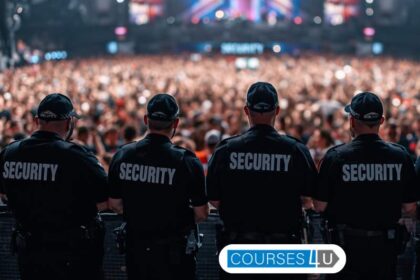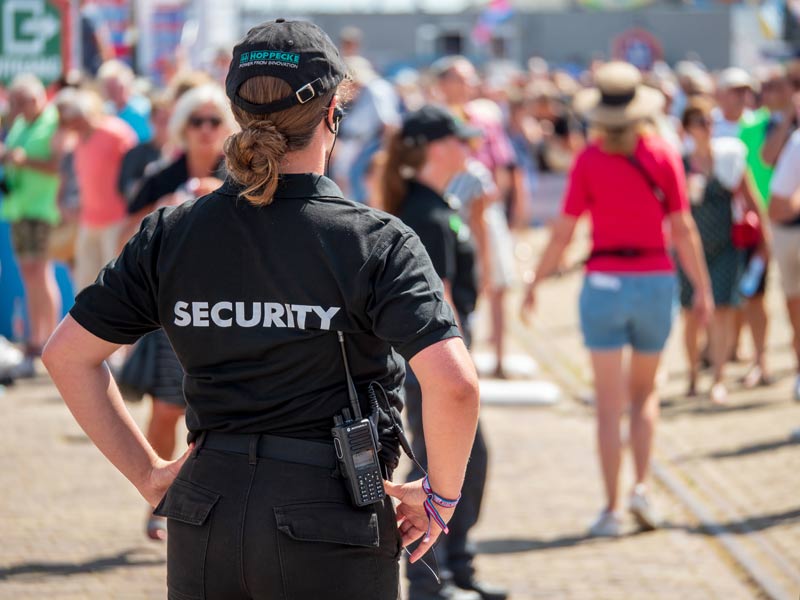
Security guards play a vital role in maintaining order and protecting properties across the UK. Whether you’re visiting a shopping centre, attending an event, or working in a corporate office, chances are you’ve encountered security professionals ensuring a safe environment.
However, many people are unaware of the legal powers security guards possess and their limitations, particularly when it comes to detaining individuals.
This blog will explore what SIA-licensed security guards are legally allowed to do, including whether they have the power to detain someone, the circumstances under which they can intervene, and what their legal limitations are.
What Legal Powers Do UK Security Guards Have?
Security guards in the UK do not have the same powers as police officers. Instead, they function as private citizens who are trained to handle security-related matters, enforce property rules, and act as deterrents to criminal behaviour. Their authority primarily extends to private property, such as shopping centres, office buildings, and entertainment venues.
-
Can Security Guards Arrest Someone?
Security guards in the UK do not have the authority to arrest individuals in the same way that police officers do. However, under Section 24A of the Police and Criminal Evidence Act 1984 (PACE), any citizen, including security guards, can carry out a citizen’s arrest if:
- A crime is being committed, or
- A crime has been committed, and the person making the arrest has a reasonable belief that the suspect is responsible.
The arrest must meet the following conditions:
- It is necessary to prevent the suspect from escaping.
- It is necessary to prevent the suspect from harming themselves or others.
- It is necessary to prevent the suspect from causing damage to property.
- It is necessary to prevent the suspect from interfering with justice.
This means that while a security guard can detain someone if they have witnessed a crime, they must hand the individual over to the police as soon as possible.
-
Can Security Guards Physically Restrain You?
Security guards are legally allowed to use reasonable force when detaining someone, but only in situations where it is absolutely necessary. This falls under the Criminal Law Act 1967, which states that reasonable force can be used to prevent crime or assist in a lawful arrest.
For example, if a security guard detains a shoplifter who is resisting, they may use minimal force to stop them from escaping. However, they cannot use excessive force, such as striking or injuring the individual unless it is in self-defence.
-
Can Security Guards Search You?
Security guards do not have the automatic right to search individuals unless:
- The person consents to a voluntary search.
- The individual is entering private property where searches are a condition of entry (e.g., a nightclub or concert venue).
- They suspect someone of carrying stolen goods inside a store, but they cannot conduct a physical search themselves.
If a security guard believes someone is carrying stolen items, they can request the person to empty their pockets or bags. However, the person has the right to refuse, and in such cases, security must call the police.
-
Can Security Guards Detain You for Trespassing?
Trespassing is not a criminal offence in most cases in the UK—it is a civil matter. This means that if someone enters private property without permission, a security guard can ask them to leave but cannot arrest or detain them unless they commit a crime while on the property.
If a trespasser refuses to leave, security can use reasonable force to escort them off the premises. However, security guards cannot hold the trespasser against their will unless the police are called.
What Are the Legal Limitations of Security Guards?
While security guards have some powers, they are bound by strict legal limitations. Here are some key restrictions:
- No Excessive Force – Security guards can only use force that is reasonable and necessary to prevent crime or harm. Unnecessary aggression or violence could lead to legal consequences.
- Cannot Arrest Without Just Cause – A citizen’s arrest can only be made when a crime has been committed. Security guards cannot arrest individuals based on suspicion alone.
- No Police Authority – Security guards do not have police powers, such as the ability to issue fines, conduct formal interrogations, or access criminal records.
- Cannot Search You Without Consent – Unless specified by law or as part of private property conditions, security guards cannot search individuals without their permission.
- No Power Over Public Spaces – Security guards operate on private property. They do not have the authority to detain or remove individuals in public areas, such as streets or parks.
What Happens If a Security Guard Acts Outside Their Legal Authority?
If a security guard oversteps their authority or engages in unlawful actions, individuals have the right to take legal action. Possible steps include:
- Filing a Complaint – If someone believes a security guard has acted inappropriately, they can file a complaint with the employer or the Security Industry Authority (SIA).
- Taking Legal Action – If excessive force was used, or an individual was unlawfully detained, they may have grounds for a civil lawsuit.
- Reporting to the Police – If a security guard violates the law, individuals can report the incident to the police for further investigation.
It is crucial for security guards to operate within the boundaries of the law and for the public to understand their rights when interacting with them.
How to Become an SIA-Licensed Security Guard in the UK
To work as a licensed security guard in the UK, individuals must complete an SIA-approved training course and obtain an SIA licence. This involves:
- Completing a Training Course – Courses4U offers security training courses in cities such as Manchester, Birmingham, Leicester, and Stockport, including:
- Door Supervisor Training
- CCTV Operator Training
- Security Guard Training
- First Aid Courses (required for licensing)
- Passing the SIA Exam – After completing the course, candidates must pass an SIA exam to qualify for licensing.
- Applying for an SIA Licence – Candidates must apply via the UK Government website and pay the application fee (currently £184).
- Starting Work in the Security Industry – Once the licence is approved, individuals can apply for roles in security, ranging from retail security to nightclub bouncers and event security.
Conclusion
While SIA-licensed security guards play a crucial role in keeping people safe, their powers are limited by UK law. They can detain individuals under a citizen’s arrest, use reasonable force if necessary, and enforce private property rules, but they do not have the same powers as the police.
Understanding these legal boundaries is essential for both security professionals and the public to ensure fair and lawful security practices. If you are considering a career in security, Courses4U offers expert training to help you get licensed and start your journey.
Ready to take the first step? Enrol in a security training course today!